Carry the coaching priority all the way through.
A useful review changes what happens next. Keep the link from game evidence to the practice plan to what players are learning.
Men’s football · Men’s flag · Women’s flag
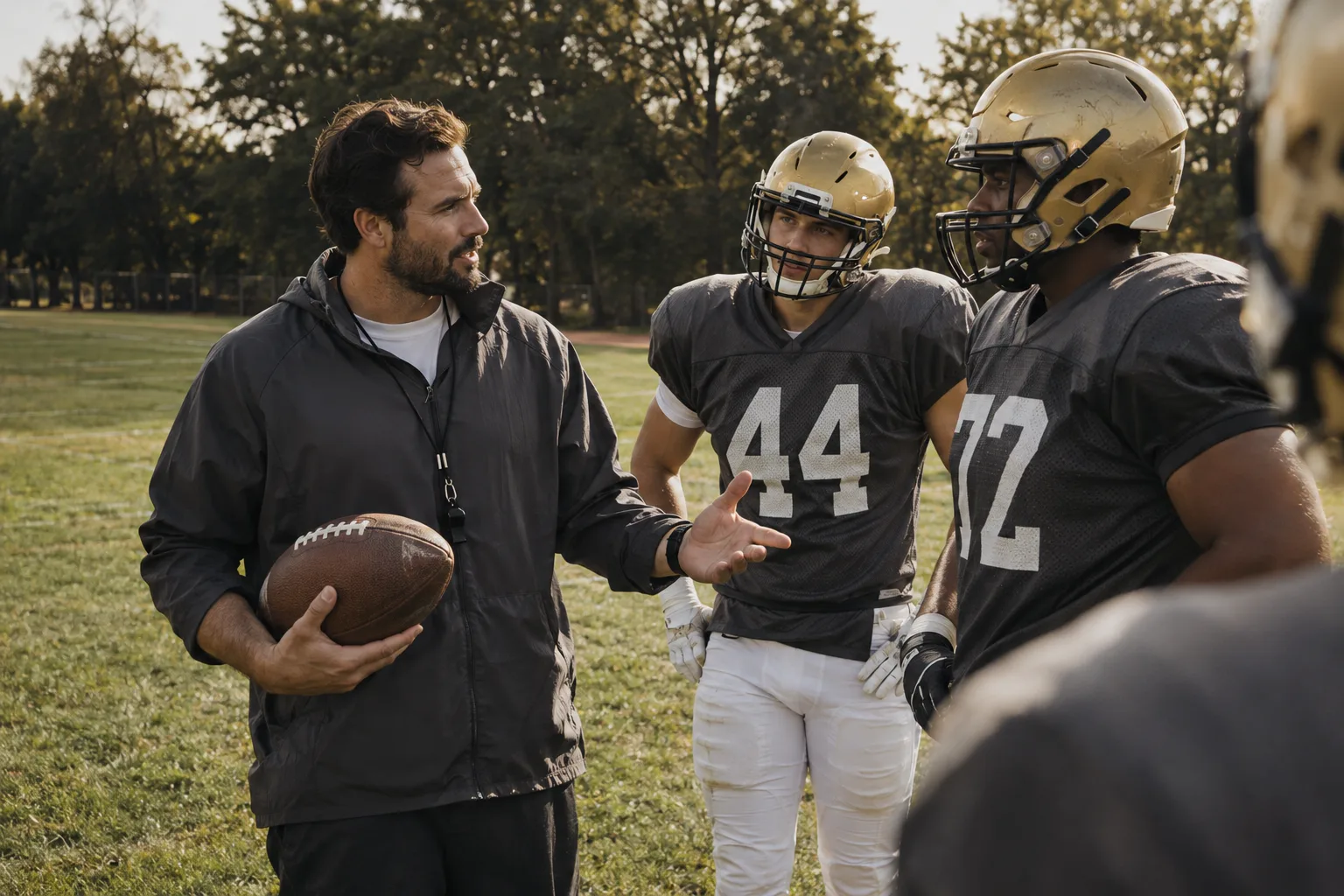
Your staff.
One plan.
1. Name the question before opening the numbers.
Choose a question with a consequence for the week: where a drive is breaking down, how a call is performing in a situation, or what the next opponent is showing. Inspect the supporting plays and the limits of the record before deciding what it means.

2. Turn the finding into work on the field.
State what the team needs to practice, which groups need it, and what the staff should coach. Fit that work into the available period time. Keep the day's schedule and the ordered call script distinct so each remains easy to use.
3. Give the teaching a destination.
Attach the coaching point to the relevant call, rep, or player instruction. Review the wording the player will see. In a meeting, ask for the recognition or assignment you want the player to understand, not simply whether they read the material.
4. Review the work that was actually recorded.
After practice, confirm what happened and note the differences from the plan. A missing record deserves a question; it does not prove the work never happened. Bring those observations into the next staff decision and keep the cycle moving.
What would a few hours back change?
Another look at a key situation. More time with your quarterbacks. A staff meeting that starts with decisions. Put your own preparation week into the calculation.
75 staff hours across a 12-week season.
Across the whole staff, small changes add up to meaningful coaching time.
A planning estimate from your inputs, not measured 1and0 results or a guarantee. Review time is deducted. Actual savings depend on your workflow and the corrections needed.
Explore preparation assistance